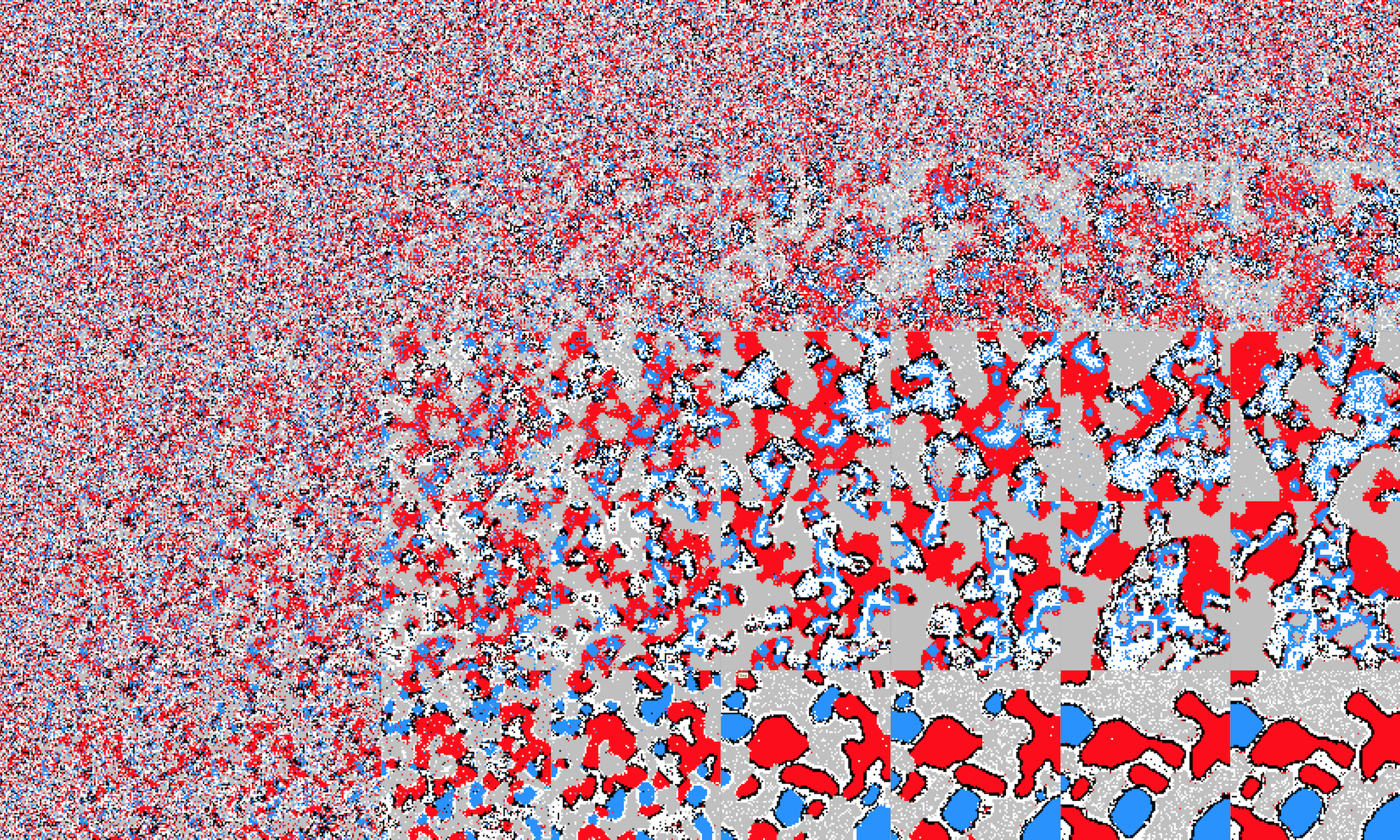
Where single people live shapes opportunities to meet romantic partners of different backgrounds. Residential segregation along ethnic lines imposes constraints on these opportunities, increasing the chances that the potential partners people meet will share their own ethnic backgrounds, and reducing the chances of making contact across group boundaries. At the same time, who people marry affects their residential choices. People who form unions within their own groups make different residential choices than those who cross ethnic boundaries when forming a union. These different patterns of residential choices can affect the evaluation of segregation. This paper combines uses Swedish population registers to consider this three-way relationship between segregation, assortative mating, and residential mobility. It estimates empirical models of (1) how segregation affects couple formation, and (2) how newly formed couples make residential choices. It then presents a simulation model showing how these demographic processes affect patterns of residential segregation. The simulations based on the combined model indicate that ethnic preferences and propinquity in union formation contribute to persistent segregation of ancestry groups. Importantly, we find that the assortative mating and residential choice processes interact: ethnically endogamous preferences prevent desegregating residential moves, while propinquity combines with residential inertia to reinforce existing segregation. With Rob Mare and Monica Nordvik. [Open Access Article]
sociological research on segregation and mobility

 Benjamin Fletcher Jarvis