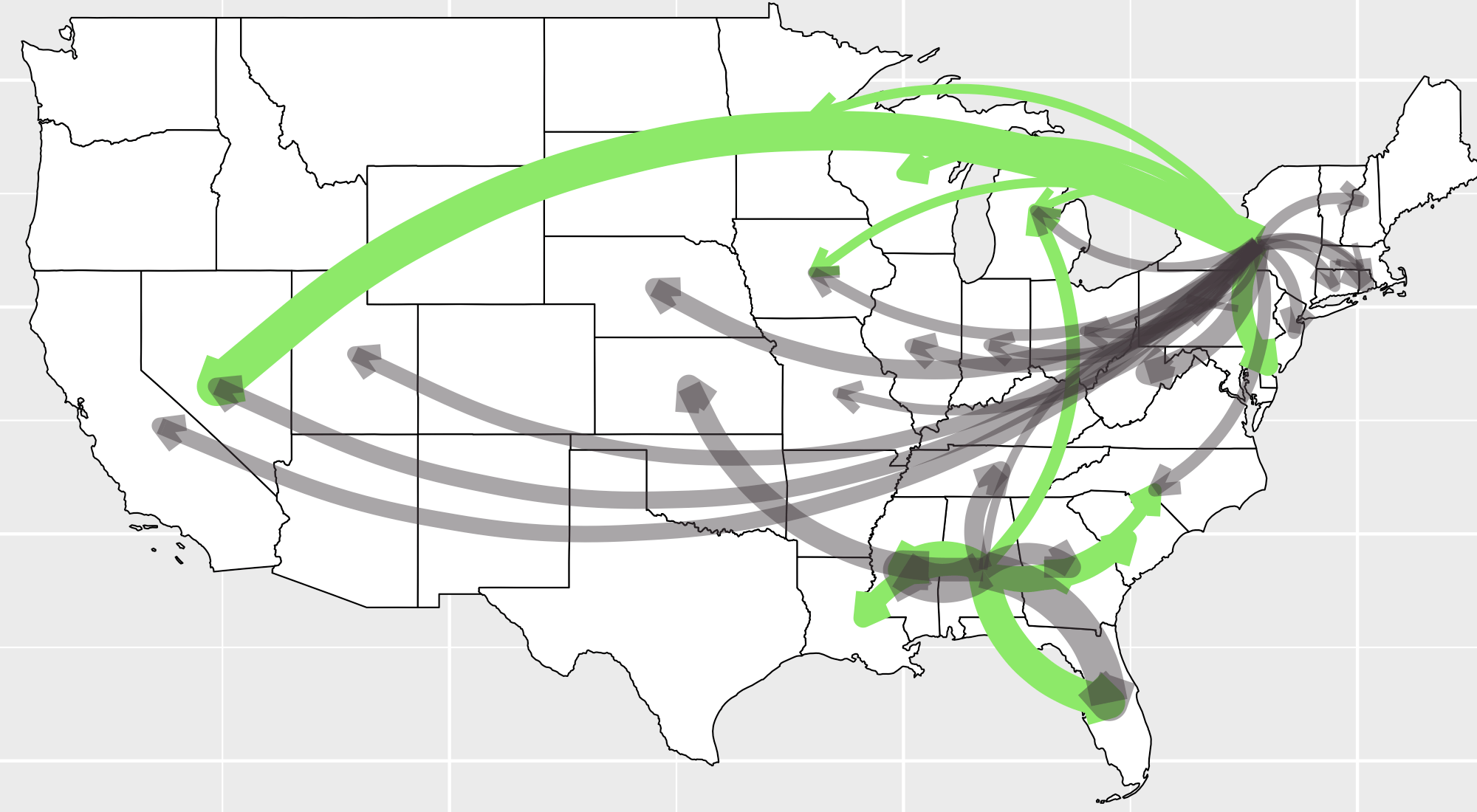
This project examines how the intragenerational social mobility of American men between the farm and non-farm sectors during the 19th century was conditioned by the spatial distribution of economic opportunities. The main thesis of the project is that unsettled agricultural land, particularly in the Midwest, created opportunities for mobility into farming, but these social transitions typically had to be accompanied by migration between states. The thesis is inspired by Frederick Jackson Turner’s “Frontier Hypothesis” and contemporaneous views of the frontier as a “safety valve” for crowded urban labor markets. Preliminary results suggest that the availability of land made a substantial contribution to both social mobility and geographic mobility in the 1870-80 period. Absent this land, levels of geographic and social mobility would have been lower in the United States. This provides some insight into recent debates about exceptionally high social fluidity in the United States during the 19th century–as compared to the UK– and helps to illuminate the special role of farming in US social mobility.
 Benjamin Fletcher Jarvis